
Among Sensex firms, Mahindra & Mahindra climbed 2.34 per cent, followed by Maruti which climbed 1.70 per cent. Power Grid, Reliance Industries, Bharti Airtel and Eternal also were also among the gainers. However, ITC, HCL Tech, Tata Consultancy Services, Tech Mahindra and Infosys were among the laggards.

India's exports registered a steepest decline in 13-month falling 9.3 per cent in August to $34.71 billion due to global economic uncertainties, while the trade deficit soared to a 10-month of $29.65 billion. According to the government data released on Tuesday, imports increased by 3.3 per cent to $64.36 billion, which is a record high, due to a significant jump in the inbound shipments of gold and silver.

Indian economy grew by 7.8 per cent in April-June -- the highest in five quarters -- before the disruptive US tariffs were imposed.

Net NPAs increased to Rs 36,260 crore in the December quarter from Rs 34,843 crore in September and Rs 33,116 crore in December 2023, observes Tamal Bandyopadhyay.

Among Sensex firms, Tech Mahindra, HCL Tech, Eternal, Axis Bank, Maruti, Tata Steel, HDFC Bank and Asian Paints were the gainers. However, Adani Ports, Trent, Tata Motors, Hindustan Unilever and NTPC were among the laggards.
Among Sensex firms, Tata Motors rose the most by 3.5 per cent while Adani Ports gained 3.16 per cent. Reliance Industries rose by 2.82 per cent. Eternal, Tech Mahindra, Kotak Mahindra Bank, Hindustan Unilever and Maruti were also among the gainers. However, Bajaj Finserv, Power Grid, Mahindra & Mahindra and HCL Tech were among the laggards.

'It must become faceless, just as the entire direct tax assessment system has already become fully online, without any human intervention in the normal course,' recommends A K Bhattacharya.

GST Reform 2.0, which trims tax slabs from four to two, signals a push for demand-led growth, and together with recent income tax cuts, sets the stage for sustained economic growth, experts said. The Goods and Services Tax (GST) Council on September 3 approved an overhaul of the indirect tax regime by taxing essentials at 5 per cent and other goods at 18 per cent. A new 40 per cent tax will be applicable on luxury and sin items.

The FMCG industry in India achieved a 10.6% growth in value terms in the December quarter of 2024, driven largely by rural markets, which have surpassed the large urban markets in growth for the fourth consecutive quarter. Festive demand and consumption-driven growth played a key role, with overall volume up 7.1% despite inflationary pressures. However, the industry also saw a "preference shift of consumers towards smaller packs" due to high food inflation. Local manufacturers continue to outperform larger FMCG companies, fueled by consistent volume growth.

The Kerala model is crucial as SMA patients in India had a long wait for a viable treatment option.

'In the past six months, capital markets have seen a dip, and realty is struggling. The stock-market investor will be cautious of putting that investment in real estate when there may be a slowdown coming.'

Despite facing financial constraints, Kerala has been able to invest in welfare schemes and targeted programmes.

Retirement fund body EPFO recorded a 13.46 per cent year-on-year growth in net member addition of 21.89 lakh in June, according to the latest payroll data released on Wednesday. The Employees' Provident Fund Organisation's (EPFO) provisional payroll data for June 2025 showed a net addition of 21.89 lakh members, marking the highest recorded addition since payroll data tracking began in April 2018, a labour ministry statement said.

Nearly 7 out of every 10 P2M UPI transactions take place in high frequency categories like groceries, restaurants, pharmacies, fuel service stations, bakeries and utility services such as electricity, gas, water and sanitation.
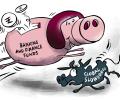
Companies in the banking, finance sector and insurance (BFSI) sector have underperformed on the bourses despite leading the earnings growth charts in the post-pandemic period. This has created a dichotomy between their earnings and share prices. BFSI companies have never been less expensive than the rest of the equity market.

India's hospitality sector is rolling out the red carpet for investors. A flurry of upcoming IPOs, or initial public offerings, the entry of new players, and ambitious expansion plans by Indian and global hotel brands are ushering in what could be the industry's most formalised era yet. Leading the charge are real estate titans, who are turning their hotel arms into global hospitality chains.

Maruti, IndusInd Bank, Bajaj Finserv, Eternal, Mahindra & Mahindra, Tata Steel, Kotak Mahindra Bank, Titan, HDFC Bank, and NTPC were among the other major gainers. Bharti Airtel and Sun Pharma were the laggards.

Mutual funds (MFs) have significantly increased their ownership across market segments, but the midcap space stands out with comparatively higher growth. Data reveals that the number of midcap companies with over a fifth of MF ownership has doubled from nine in March 2022 to 18 by March 2025. In contrast, largecap stocks saw only a marginal rise, from three to four such companies during the same period.

The Human-rated LVM3 vehicle, the Crew Escape System and the Crew Module and Service Module are all in final stages of testing and integration.

India's merchandise exports to the US rose by 16.93 per cent to $8.83 billion in May, while imports dipped by 5.76 per cent to $3.62 billion during the month, according to the commerce ministry data. During April-May, the country's exports to the US increased by 21.78 per cent to $17.25 billion, while imports rose by 25.8 per cent to $8.87 billion, the data showed.

Indian stock markets have experienced some ups and downs in the first half of 2025. However, both the Nifty 50 and Sensex saw steady gains, supported by a healthy economy and better corporate earnings. In this article, we will look at the detailed performance of these key indices and explore the sectors that drove the market rally.

Bajaj Finance, IndusInd Bank, State Bank of India, Maruti, Tata Motors, ITC, Tata Steel and Reliance Industries were also among the gainers. Nestle, NTPC, Kotak Mahindra Bank, Power Grid and Titan were among the laggards.

'The market's nervousness ahead of anticipated US tariffs has led to a significant downturn in Indian equities.'

Early-bird results for the January-March 2025 quarter (Q4FY25) suggest a slowdown in earning growth for India Inc, despite a benign cost environment that has led to an improvement in margins. The combined net profit (adjusted for exceptional gains and losses) of 175 early-reporting companies rose by 3.8 per cent year-on-year (Y-o-Y) in Q4FY25, marking the slowest growth in 17 quarters.
From the Sensex pack, Zomato jumped nearly 5 per cent, followed by Titan which climbed almost 4 per cent. IndusInd Bank, Maruti, Tech Mahindra, Adani Ports, Bharti Airtel and HDFC Bank were also among the gainers.

India fully utilised its military modernisation budget in 2024-2025 -- the first time in five years -- and signed a record Rs 2 trillion defence contracts.

India's fresh restrictions on limiting access to Bangladeshi exports appear to be in response to Dhaka denying certain value-added items from the Northeast to enter that country through the land transit points.

Sun Pharma, Tata Steel, State Bank of India, Axis Bank, Tata Motors, Larsen & Toubro and ICICI Bank were also among the Sensex gainers. HCL Tech, UltraTech Cement, Nestle and Hindustan Unilever were among the laggards.

From the Sensex pack, NTPC, Tech Mahindra, Zomato, Axis Bank, Bajaj Finance, Infosys, Maruti, State Bank of India, Kotak Mahindra Bank, Reliance Industries, Hindustan Unilever, and HDFC Bank were the losers. IndusInd Bank, HCL Tech, Titan, Mahindra & Mahindra and Power Grid were the gainers.

India's exports grew marginally by 0.7 per cent to $41.97 billion in March, while the trade deficit stood at $21.54 billion in the month, the latest government data showed on Tuesday.

Tata Steel and Tata Motors dropped over 10 per cent each. Larsen & Toubro, HCL Technologies, Adani Ports, Tech Mahindra, Infosys, Tata Consultancy Services, Reliance Industries and Mahindra & Mahindra were the other big laggards.
From the Sensex pack, Asian Paints, NTPC, Reliance Industries, Tata Steel, Bajaj Finserv, Hindustan Unilever, Sun Pharmaceuticals, Adani Ports & SEZ, Axis Bank, Tata Consultancy Services, Titan and Bajaj Finance were the major gainers. Tech Mahindra, Kotak Mahindra Bank, Zomato, Tata Motors, and IndusInd Bank were the laggards.

The gap between credit and deposit growth in the banking system is expected to decline sharply to 80 basis points (bps) in the next financial year from an average of 386 bps over the FY22-Q3FY25 period, according to rating agency India Ratings. This would be against the backdrop of sharp moderation in the incremental loan deposit ratio (LDR) of the Indian banking system to 85 per cent in February 2025 from 117-118 per cent in the same month of 2024.
From the Sensex pack, Bajaj Finserv, IndusInd Bank, NTPC, Larsen & Toubro, UltraTech Cement, Adani Ports, Bajaj Finance, Power Grid, Zomato, State Bank of India, HDFC Bank and Titan were the biggest gainers. Tata Motors tanked over 5.5 per cent after US President Donald Trump announced he would impose 25 per cent tariffs on imported cars. Sun Pharma, Kotak Mahindra Bank, Bharti Airtel, HCL Tech and Mahindra & Mahindra were also among the laggards.

All Sensex shares, except for Hindustan Unilever, ended with losses. Tata Steel fell the most by 7.33 per cent followed by Larsen & Toubro which cracked 5.78 per cent. Tata Motors, Kotak Mahindra Bank, Mahindra & Mahindra, Infosys, Axis Bank, ICICI Bank, HCL Technologies and HDFC Bank were the other big laggards. Hindustan Unilever ended marginally higher.

Gurindervir, Kujur, Manikanta, Amlan set new 4x100m relay national record

From the 30 Sensex companies, Zomato, Tata Motors, IndusInd Bank, Asian Paints, Bajaj Finance, Maruti Suzuki India, Adani Ports, Hindustan Unilever, Reliance Industries, Bajaj Finserv, UltraTech Cement and Infosys were among the laggards. In contrast, State Bank of India, ICICI Bank, Tata Steel, NTPC, Tata Consultancy Services, PowerGrid, Kotak Mahindra Bank and Sun Pharmaceuticals were the gainers.

Singapore's long-ruling People's Action Party (PAP), led by Prime Minister Lawrence Wong, has secured a landslide victory in the country's general election. The PAP won 87 of 97 seats, with voters endorsing the party's focus on stability and economic security amidst global uncertainties. Wong expressed gratitude for the strong mandate and vowed to tackle concerns about the cost of living and housing. The results mark a significant win for the PAP, which has been in power since Singapore's independence in 1965.

The production growth of eight key infrastructure sectors slowed to a six-month low of 7.8 per cent in November due to a decline in the output of crude oil and cement sectors. The growth rate in the production of coal, fertiliser, steel, and electricity also decreased during November this year. According to the data released by the government on Friday, the growth during the month under review, however, is higher than the 5.7 per cent recorded a year ago.

'Balancing tunnel developments with ecological realities is a major challenge and, when overlooked, can contribute to mishaps.'
